
Why Most Golfers Never Fix Their Driver
(And What Actually Works)
You already know something's wrong with your driver.
You've known for a while. You've watched YouTube videos. Tried a tip from your playing partner. Maybe even had a lesson. And for a round or two, things felt different. Then it came back. Same shape. Same miss. Same frustration.
Here's what nobody has told you straight: you're not going to fix it by feel. Ever.
And until someone shows you why, you'll keep doing what you've always done. Hoping the next range session is the one that cracks it.
It won't be.
Three Numbers. That's It.
Every bad driver shot comes down to three things. Not your grip. Not your stance. Not your tempo. Three numbers, and they're connected.
Face angle. Where your clubface points at impact is the single biggest driver of where the ball starts. Not your swing. Your face. Most golfers are convinced they're square at impact. Most golfers are wrong, by enough degrees to cost them twenty, thirty yards of accuracy. You can't feel a face that's two degrees open. But you'll see the result every single time.
Attack angle. The driver is the only club in the bag you're supposed to hit on the way up. Every other club (irons, wedges, fairway woods) you hit down. So, you've spent years training a downward strike. Then someone hands you a driver and tells you to hit up. Your body has no idea what that means. A negative attack angle loads the ball with spin, kills your launch, and turns a 250-yard drive into a ballooning 210 that drifts right. Three degrees of attack angle is worth fifteen yards of carry. That's not a small thing.
Path and curve. Your swing path and your face angle work together. The gap between them creates curve. A path that's too far left with a face that's open gives you the slice you've been fighting for years. Close your face without changing your path and you just swap a slice for a hook. Neither is the answer. Understanding the relationship between the two is.
Fix one without the others and you're moving the problem, not solving it.
The Uncomfortable Truth
You cannot feel your face angle at impact. You cannot feel your attack angle. You cannot feel your path to within the margin that matters.
What you can feel is the result. And by the time you've felt it, you've already decided what went wrong. That decision is almost always wrong.
Golfers blame their swing when it's their face. They blame their face when it's their path. They make an adjustment, sometimes it works, sometimes it doesn't, and they walk off the range no clearer than when they arrived.
This isn't a skill problem. It's an information problem.
You're trying to solve an equation without being allowed to see the numbers.
What Happens When You See the Data
The GC Quad doesn't lie.
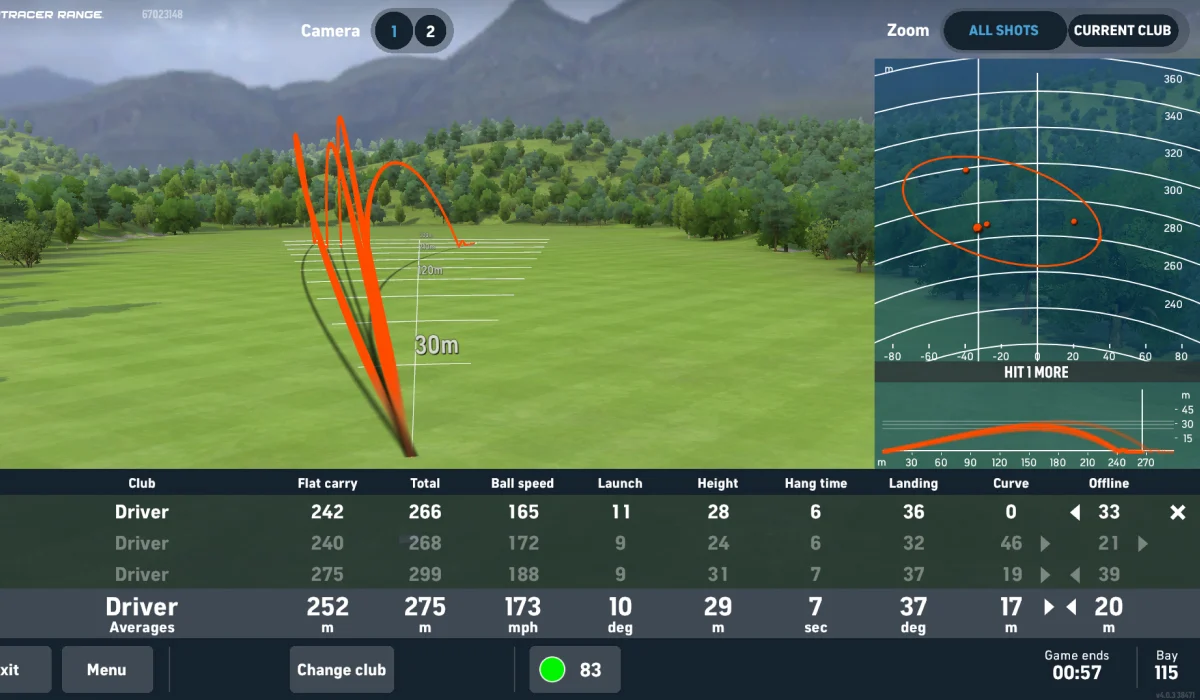
Face angle. Attack angle. Club path. Ball speed. Launch angle. Spin rate. Every shot. Every time. Instantly.
When golfers see their numbers for the first time, two things happen. First, they stop making the wrong corrections, because now they know what's actually happening, not what they thought was happening. Second, they see their patterns. The tendencies that have been quietly ruining their driving for years. Right there on the screen. Undeniable.
That moment of seeing your data isn't discouraging. It's the opposite. Because now you have something to work with. A real target. A real measure of progress. Practice stops being guesswork and starts being work that actually compounds.
What Real Practice Looks Like
Most golfers practise by hitting balls until something feels right. That's not practice. That's sampling.
Real practice looks like this: you know your attack angle is -4°. Your target is +2°. You hit ten balls, watch the number after each one, and make small adjustments until you're moving in the right direction. You're not chasing a feeling. You're chasing a number. And numbers don't lie to you.
Twenty balls with a clear target and instant feedback will do more for your driver than two hundred balls hit into the void.
The golfers who improve aren't more talented. They're better informed.
Here's What I Want You To Do
Come in. Bring your driver. Spend 45 minutes on the GC Quad with me.
I'll show you your face angle, your attack angle, your path. I'll show you exactly what's causing your driver to do what it does, in plain language, no jargon, no guessing. And I'll tell you honestly what it would take to fix it.
That's the Game Assessment. It's free. It takes 45 minutes. And you'll leave knowing more about your driver than you've learned in years of range sessions.
No hard sell at the end. Just clarity and a decision that's yours to make.